


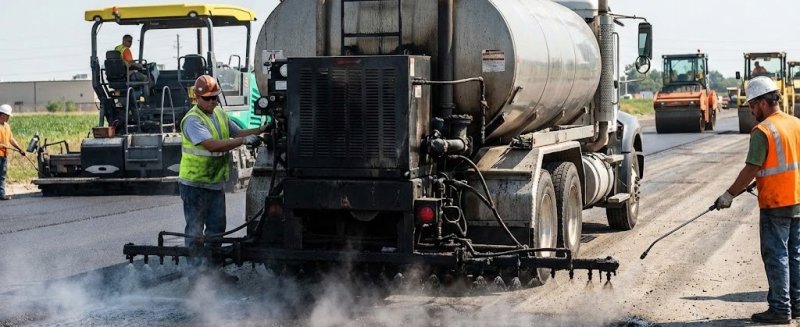
Asphalt distributor systems are high-precision equipment that enables the controlled spraying of bitumen, emulsions, and modified binders onto the surface during road paving processes, and a homogeneous layer is obtained with accurate calibration. This structure directly affects adhesion, durability, and surface stability, which are fundamental performance criteria of road engineering. Advanced systems feature layered management mechanisms such as temperature compensation, pressure control, and spray width adjustment.
How Asphalt Distributor Systems Work
Asphalt distributor systems heat the binder inside the tank to reach a specific viscosity and apply it to the surface through a spray bar under pressure. The basic operational steps include binder preparation, spraying calibration verification, and surface condition control. High-precision valves, pump assemblies, and temperature sensors improve process stability. Modern vehicles reduce spraying errors to below 3% thanks to automatic spray control units.
Main Stages of Operation
The system circulates the material inside the tank using a hydrostatic drive pump for homogeneous heat distribution. Then the operator adjusts the spray bar height and nozzle spacing to apply the desired amount of material. During this process, pressure is continuously monitored to ensure equal flow from each nozzle.
Role of Thermal Management
The binder temperature is maintained between 150–180°C depending on viscosity. Non-uniform heating causes streaking; therefore heating coils are distributed evenly across the tank.
Key System Components
Tank capacity, robust pump structures, precise spray bar geometry, and advanced control units ensure accurate application. Each component contributes to long-term durability.
Tank Structure
Tanks are typically made of steel alloys and lined internally with coatings resistant to bituminous materials. Capacities of 6–14 m³ are common for medium and large projects. Thermal insulation reduces heat loss.
Pump and Circulation Systems
Pump capacity determines material flow. Insufficient performance reduces surface adhesion. Hydraulic-driven models ensure sensitive variable-flow control.
Spray Bar Design
The spray bar defines application width through nozzle distribution. Bars consist of 3–4.5 m extendable modules. Nozzle angles vary between 15–30 degrees.
Control Unit and Automation
The cabin panel monitors speed, pressure, and temperature in real time. GPS-assisted systems calculate application quantity in g/m², offering around 10% material savings.
Usage Conditions
Distributor systems are used for base layer bonding, surface treatment, and tack coat applications before hot-mix asphalt. Uniform binder distribution reduces deformation risks.
Base Layer Applications
Surface moisture is critical during tack coat procedures. Moisture above 2% hinders adhesion.
Bitumen Emulsion Handling
Under cold conditions, pressure must be adjusted more precisely to prevent splashing due to low viscosity.
Patch and Maintenance Work
Spot-spray mode enables material savings by treating only required areas.
Factors Increasing Operational Efficiency
Efficiency depends on calibration, operator skill, and proper surface preparation. A 5% binder error can lead to early surface failures.
Role of Calibration
Nozzle openings must be checked every 50 operating hours. Worn nozzles distort flow patterns.
Application Speed
Ideal field speeds range between 3–5 km/h. Higher speeds reduce binder coverage and create voids.
Surface Cleaning
Dust reduces adhesion by up to 30%, making mechanical sweeping essential.
Data Point
International pavement standards require tack coats to achieve a minimum adhesion coefficient of 0.55.
Nozzle Technologies and Spray Geometry
Nozzle geometry defines the application pattern. Angled nozzles are ideal for wide areas; narrow ones suit spot operations.
Nozzle Types
Spray Pattern
Spray bar height is critical. Excessive height increases splashing; low height causes streaking.
Angle–Pressure Interaction
Wider angles increase coverage but reduce binder density. Pressure is commonly maintained between 2–3 bar.
Heating System and Durability
Continuous heating preserves binder characteristics. Efficient thermal systems reduce fuel consumption.
Heating Coil Arrangement
Coils located near tank surfaces speed up heat transfer but increase risk of binder oxidation.
Oxidation Risk
Prolonged exposure above 150°C increases viscosity and degrades binder quality.
Energy Management
Thermal sensors can reduce fuel consumption by up to 12%.
Digital Control and Measurement
Digital systems minimize operator error and calculate accurate binder quantities.
GPS-Based Application
Satellite positioning synchronizes speed, spray rate, and output, minimizing long-distance errors.
Feedback Mechanisms
Pressure and temperature sensors trigger automated warnings.
Data Logging
Project reports log binder density, speed profiles, and temperature variations for optimization.
Strategies for Different Substrates
Surface characteristics directly affect binder quantity and spraying mode.
Granular Surfaces
Absorption is high; typical ranges are 0.4–0.6 kg/m².
Aged Asphalt
Micro-cracks aid penetration but oil residues require cleaning.
Concrete Surfaces
Low absorption requires thinner coats and lower speeds for clean application.
Application Quantity Calculation
Binder amount depends on surface roughness, temperature, traffic load, and layer thickness.
Typical Values
Data Point
European standards require ≥90% homogeneity for tack coats.
Operator Competence
Operator expertise is critical even with advanced automation.
Common mistakes include:
Maintenance and Parts Management
Neglected maintenance increases energy usage and reduces precision.
Typical Maintenance Cycles
Field Difficulties
Wind, slope, and ambient temperature influence binder behavior.
Paving Types
Tack coats can increase shear resistance by 40%.
Emerging Technologies
New systems feature: